Where’s First Draft?
First Draft by Tim Porter, my blog on quality journalism, is archived here.Buy My Book
Organic Marin, Recipes from Land to Table: Photographs, stories and recipes from organic farmers of Marin County and the restaurants that support them. Buy it here from Amazon.
My Art, Your Walls

Where to find my pictures
See My Portfolio
Buy prints at The Marin StoreArchive
Categories
Search
Images
- Bert Stephani
- Bill Simone
- Black Star Rising
- Bryan Niven
- Burn Magazine
- Business of Photography
- Conscientious
- Dave Tejada
- Digital Journalist
- Exposure Compensation
- Feature Shoot
- Fred Miranda
- i heart photography
- Joe McNally
- John Keatley
- Lighting Essentials
- Magnum Blog
- Magnum Photos
- National Press Photographers Assn.
- Nikonians
- Paul Souders
- Photo Attorney
- Photo Business News
- Photo District News
- Photo Editor
- Photo Induced
- PhotoJournalism
- Pixchannel
- PixSylated
- ProPhotoLife
- Rob Galbraith
- Shoot the Blog
- SportsShooter
- State of the Art
- Stephen Faust
- Strobist
- Think Tank Photo
- Visual Science Lab
- What’s the Jackanory
- Year in Pictures
Journalism
Tags
Baseball Brad Will Buck Institute Canal Canal Alliance College of Marin D3 David Hobby David Pogue Digital Journalist Fairfax Fran Ortiz Golden Gate Bridge Joe McNally Journalism Larkspur Magnum Marin Marin County Marin General Hospital Marin Magazine Mary Ellen Mark Mexico Mill Valley Newspapers New York New York Times Nikon Novato Oaxaca Open studios Organic Marin Photography Photojournalism Point Reyes Station Salon San Francisco San Rafael Sausalito SB800 Scott Kelby Strobist The Image Flow Tiburon West Marin
Category Archives: On the Job
On the Job: America’s Cup

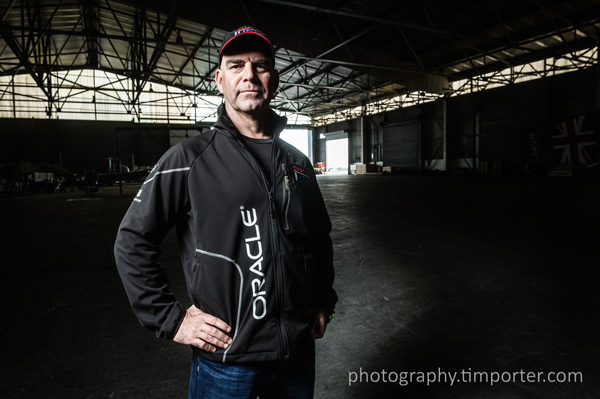
John Kostecki is the brains behind the boat. As the tactician for Larry Ellison’s 2013 America’s Cup team, the 48-year-old world champion sailor is the guy who will be plotting the course when the team’s 72-foot catamaran races this summer on San Francisco Bay.
I photographed Kostecki at Oracle Team USA’s headquarters off lower Third Street in San Francisco. When Kostecki told me to meet him at the team “shed,” I envisioned some shanty-like building sitting dockside along the water. Wrong. The “shed” is massive warehouse on Pier 80 whose size dwarfs the 44-foot hulls of the catamarans team used last summer for preliminary races.
As I usually do, I had little time to make a picture, and went with one light and a wide lens. I wanted to highlight Kostecki, of course, but also show the spaciousness of the shed.
Here’s the interview by Stephanie Martin of Kostecki in Marin Magazine.
On the Job: Cleaning Up Your Mess

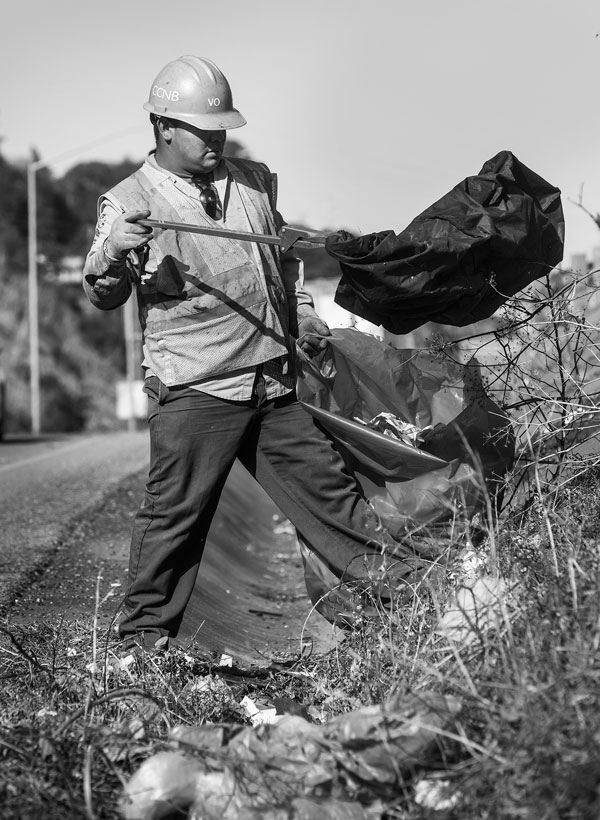
Many of us are pigs. Sadly. We toss our plastic bottles, takeout containers and other trash out of our cars, inconsiderate of the environmental damage it does, the aesthetic blight it causes and the cost to to clean it up.
I spent some time walking a section of U.S. Highway 101 in Marin County with a crew from the Conservation Corps North Bay (CCNB) for a story in Marin Magazine about how, even in the wealthiest of the Bay Area’s counties, motorists use public roadways as their private dumping grounds.
The CCNB crews consist of young men and women who were born into challenging lives and, with the help of the Corps and the sweat of their brows, are turning them around.
Next time you’re about to dump your double-decaf-mocha-grande cup out of the car window, think about who has to clean up your mess.
On the Job: Seniors for Peace

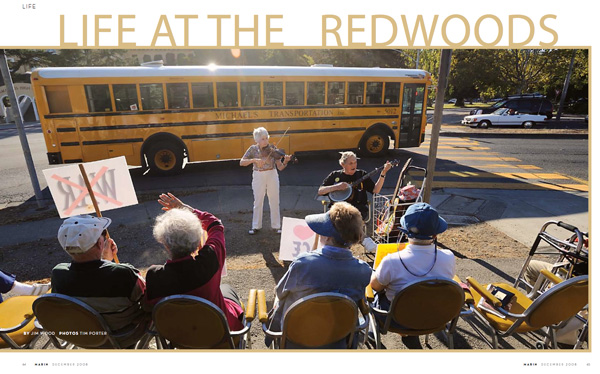
For 10 years, a group of elderly residents of Northern California’s hippest retirement community, The Redwoods in Mill Valley, have gathered every Friday afternoon at 4 o’clock on the street corner in front of their complex to demand peace over war.
Mill Valley Seniors for Peace, as they call themselves, began the weekly demonstration in protest of the U.S. invasion of Iraq in the spring of 2003. It has continued without interruption, through the winter’s rain, the summer’s fog and the inevitable deaths that occur in a group whose members include several who are well into their 90s.
As street theater, they are rowdy and spirited and impossible to ignore, yet, reflecting their generation, they are also respectful, polite and welcoming to strangers (and strange photographers) who stop to chat with them or take their pictures.
Led musically by Rolly Mulvey (above), an 85-year-old retired paper salesman who strums a 12-string guitar that is short a few strings, the group gathers for hour, some standing, some sitting, some in wheel chairs, to sing songs of Pete Seeger and Woody Guthrie, to applaud passing motorists who honk in support, and to remind all of us, in a greater sense, that passion, commitment and action are not the provenance of only the young.
I’ve photographed these folks several times over the decade they’ve taken to the corner, including once for a Marin Magazine feature on The Redwoods. (Here’s a PDF of the story).
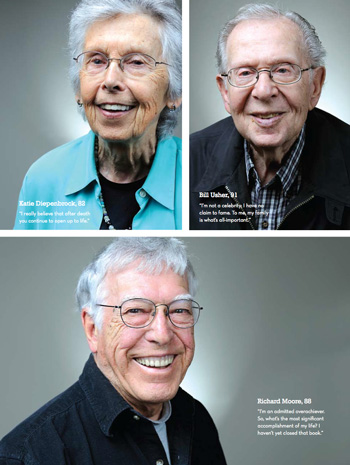
For that ariycle I not only photographed the weekly demonstration (see the photo below), but made portraits of the seniors themselves (left.).
Bill Usher, the grandfatherly-looking gentleman in the upper right, is one of the group’s founding members. He was 91 when I took that picture. Today he is 95 and still out there on that corner. He told Marin Magazine, which ran a one-pager on the group to mark its 10th anniversary: “We live right here. And we’ haven’t missed a Friday since January of ’03, when Bush talked about a war against Iraq.”
Earlier, in the 2008 story, Usher said,
“I feel strongly about it. If I could talk to President Bush, I’d tell him 9/11 was justification for invading Afghanistan but our going into Iraq was wrong in the first place. We took our eye off the ball. It was a terrible, terrible mistake.”
For the photograph this time I tried something different. I brought my Profoto pack with me and hung a beauty dish above the group as they sang, beat drums and waved signs. I wanted a photo that was as bright and animated and full of life as the Seniors for Peace are. I was happy with the results.

On the Job: Brenda Chapman, Oscar Winner

Brenda Chapman won an Oscar for co-directing the animated feature “Brave,” but before she did that she stopped by my studio a few months ago for an interview with Marin Magazine and a photo session.
She was delightful. As she talked with writer Mimi Towle, Brenda mugged for the camera, sketched some drawings on a large pad she’d brought with her and generally kept us all in laughter — mimicking, for example, her heroine’s (Merida) stance with a bow and arrow.
Merida, by the way, is based on Chapman’s 13-year-old daughter, Emma, a student at Mill Valley Middle School. She told the Marin Independent Journal in an article published today that when her daughter was younger …
“… She was so strong-willed, challenging me every step of the way. Honestly, I never did that to my mom. It was old school in my house growing up. But my daughter took over my life. I’d be going to work thinking about the morning I had with her. It evolved into channeling that energy into creating something positive around it.”
Congratulations to Brenda.
Tagged Brave, Brenda Chapman, Marin Magazine
Leave a comment
On the Job: Claudia Cowan, Fox News
The key to looking good in a photograph – aside from being biologically blessed with an attractive array of DNA — is being relaxed. That’s why I like pointing my camera at broadcasters and actors. They’re used to being in front the lens. They know how to hold themselves, how to smile and how to wait (which is important during a shoot because there always seems to be a lot waiting — for something technical, for the makeup, for everyone to say what they need to say.)
Nothing much phases them. Ordinary people — meaning you and I — get nervous when they wait or, say, there’s a computer glitch (which happens regularly these days with tethered shooting). Oh, oh, they think, the photographer’s having a problem and I’m going to look terrible.
That doesn’t happen with pros like Claudia Cowan, Fox News’ San Francisco reporter. I photographed her for a Q&A with Marin Magazine (here’s the story). She brought a couple of dresses, several hats and the other important thing for this kind of glammy photo with a lot of lights — a makeup artist, a good one like Christina Flach.
Christina and I worked together once before — only that time it was more personal. I photographed her husband, ex-tennis pro Ken Flach, who hung up his racket to open a barbecue joint, Best Lil’ Porkhouse in San Rafael.
My work is small time compared to much of what Christina does — TV ads, print campaigns, etc. — so she was as cool as Claudia, which makes my job pretty easy. All I need to do is get the lights right, make sure the cords are connected and push a shutter button a hundred times or so.
Working with pros makes me look even more professional.
(See Claudia and Christina together in the gallery photos below).
On The Job: Christmas Lights

I love Christmas lights. What’s outside a house during the holidays says a lot about who’s inside. Are they garish? Tasteful? Excessive? Subdued? Artistic? Do their lights have a message? Something religious, something commercial or maybe just: “Peace.”
Last December I photographed dozens of homes, houseboats, trees and yards in Marin County festooned with lights, mechanical Santas and inflated snowmen. Some, such as the single peace sign on a driveway gate, made me wistful. Others, such at the Mill Valley home above, made me marvel at the creativity of its decorators. And a few, such as a Mill Valley waterfront home ablaze with thousands of lights (see the slideshow) made me wonder about sanity of the people who lived there. (They turned out to be a wonderful older couple — here’s their story.)
Marin Magazine collected a dozen or so of the shots and ran them in the December issue. Here’s the layout.
Merry Christmas, all.
On the Job: The Garden in the Canal

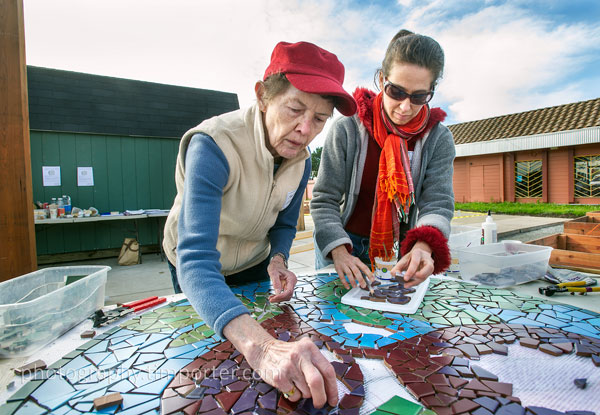
Mosaic artist Rachel Rodi, right, helps volunteer Joanne Gordon at the the new Canal Community Garden
Far out on the edge of the Canal, past the blocks crammed corner-to-corner with parked cars, beyond the rows of sagging apartment houses packed with immigrants, on the other side of the new Mi Pueblo grocery, where Mexicans and Guatemalans and Salvordorans shop for sheets of chicharron, fat plugs of quesillo and other foods that make home seem less distant, far the from busy intersection where broad-backed men line up for day labor, not near any of those things, but on the long, low flat of fill that stretches to the Bay and one day will hold some brand of box store if the city fathers have their way but for today, at least, sits empty, they’re building a garden.

The Canal Community Garden, located on a quarter-acre of city land at Bellam Boulevard and Windward Way, is an array of 5-foot-by-10-foot, redwood-rimmed beds that, come next year, will abound with organic, herbs, fruits, vegetables and flowers, each plot the labor of someone whose desire to extract bounty from the land overcame the unlikelihood that they’d ever be able to do it in a place as infertile as the Canal.
Work on the garden began in September. Seeds go in the soil in February. When the first harvest comes, the urban farmers and gardeners of the Canal should thank The Trust for Public Land and the Canal Alliance for making it happen.
I was there on Saturday, talking with a Philip Vitale of the Trust for Public Land, the project manager. He filled me in: a budget of more than $600,000; 92 garden plots of various sizes; a greenhouse for sprouting; a storage shed with lockers; a central space for classes and education; and, centering it all, a circular mosaic celebrating the overlap of art, food and community.
The mosaic came together while I watched. Oakland artist Rachel Rodi, the designer, and a half-dozen other women worked shoulder-to-should around a rectangular table, cutting sheets of blue, purple and green tile into shards of many shapes, laying beads of glue on the pieces and inserting them into the unfinished mosaic. It was a jigsaw puzzle with a twist: There were no pieces until someone made them.
The Canal Community Garden is the successor to one that was lost to the expansion of the Pickleweed Community Center in 2005. Since then, said Vitale, The Trust for Public Land has worked on a replacement. Partnering with the Canal Alliance, the neighborhood’s primary social service and advocacy organization, was key to the success of the project and ensures ongoing management of the garden, he said.
Daniel Werner, an AmeriCorps VISTA staffer on loan to Canal Alliance, is the garden coordinator. (To learn more about the garden or to apply for a plot, contact Werner at danielw@canalalliance.org, 415-306-0428.
I showed up at the garden on Saturday to scratch an itch, one that’s festered in the years I’ve been out newspaper journalism — a desire to feel the connection to community I felt when I first fell into photojournalism and, then, reporting.
As many did, I wandered into journalism by accident, but once there found enchantment and intrigue in the stories of ordinary people. I began as a photographer and loved capturing the faces of people with the camera. When I started writing, I became addicted to the interview, the act of questioning and asking why and how and who. I was nosy and I guess was needy and the conversation satisfied both.
Eventually, I let many of those things slip away. I managed people instead of photographing them. I wrote memos instead of stories. I looked far ahead and missed what was in front of me. I’d succeeded in the business of journalism, but I’d stopped honoring the passion that brought me to it in the first place.
Now, I’m, if not wiser, certainly older. I don’t confuse ambition with passion any longer. I recognize the difference between what I must do and what I love to do. I admire more the great storytellers, visual and written, and the work they do to bring those stories to us. And, perhaps with some regret – because we all have just a little, don’t we? – I wish I had made more of an effort to become one of them.
I didn’t, though, so I do this – stop by an empty city lot on a cold fall afternoon to meet a group of good-minded people who are building a garden, an enterprise that enriches the neighborhood, elevates the common welfare and rewards them with the individual satisfaction. I take some pictures, I ask a few questions, I find a small story and I share it. It is journalism with the smallest “J” possible. Not hard-hitting. Not world-changing. Not much of anything really other than a thin slice of truth, a small dollop of daily life, and a healthy reminder to myself that this is who I once was – and who I can be again.
Also posted in Uncategorized
Tagged Canal, Canal Alliance, community garden, garden, Marin, mosaic, Rachel Rodi, The Trust for Public Land
Leave a comment
On the Job: Children of the Canal

Immigration is not an abstraction. Beyond the policy debate and political posturing are real people who make their way to the United States in search of opportunity, their bodies ready to work, their minds intent on success and their hearts filled with dreams of better lives for their children.
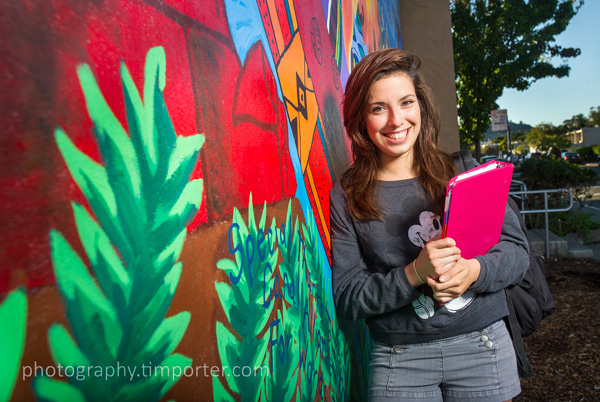
Four years ago, I spoke with some of those children, boys and girls — sons and daughters of immigrants from Mexico and Central America — enrolled in a Canal Alliance education program about their future. Their stories and their pictures ran in Marin Magazine under the headline “Sueños de Niños,” dreams of children. Recently, I talked with six of them again, all young women now, some in high school, some in college, one already a mother. Their dreams have changed and so have they.
Here are their stories from 2012.
Here are their stories from 2008.
The photos below are from this year. Inset into each is the photo from 2008.
Tagged Canal, Canal Alliance, Marin, Marin Magazine
Leave a comment
On the Job: The Survivor

On April 14 the Low Speed Chase, a 38-foot yacht named after the infamous televised police pursuit of O.J. Simpson, set off from San Francisco Bay for the Farallones Islands, a jagged outcropping of rock 27 miles out in the Pacific, as part of the annual Full Crew Farallones Race, an and out-and-back competition known to test the skills of even the most experienced sailors.
Eight souls were aboard the Low Speed Chase. Three returned to shore alive. The death of the other five crew members — one of the worse U.S. yachting tragedies — and the confluence of massive seas and miniscule course miscalculations that led to the foundering of the Low Speed Chase is well documented. (See a video of ocean conditions at the time). What was originally missing were the personal stories of those who survived, plucked from the sea and the shoals of the Farallones to sail another day.
That gap was filled in part by Bryan Chong, one of the three survivors. The 38-year-old Tiburon father and tech company vice president first told his story to Latitude 38, the voice of the Bay Area yachting community, and later, more extensively, to writer Jennifer Woodlief, an investigative sports reporter, author and former Sports Illustrated scribe.
Woodlief, who also lives in Tiburon, used Chong’s account at the heart of her 6,000-word accounting of the tragedy, which Marin Magazine published in two parts in its October and November 2012 issues. (Part 1, Part 2).
I acted as photo editor on the story, getting shots made by San Francisco Chronicle photographer Brant Ward from Polaris, by the U.S. Coast Guard and by Sophie Webb, a Farallones researcher who was on the island and witnessed the Coast Guard Rescue of the survivors.
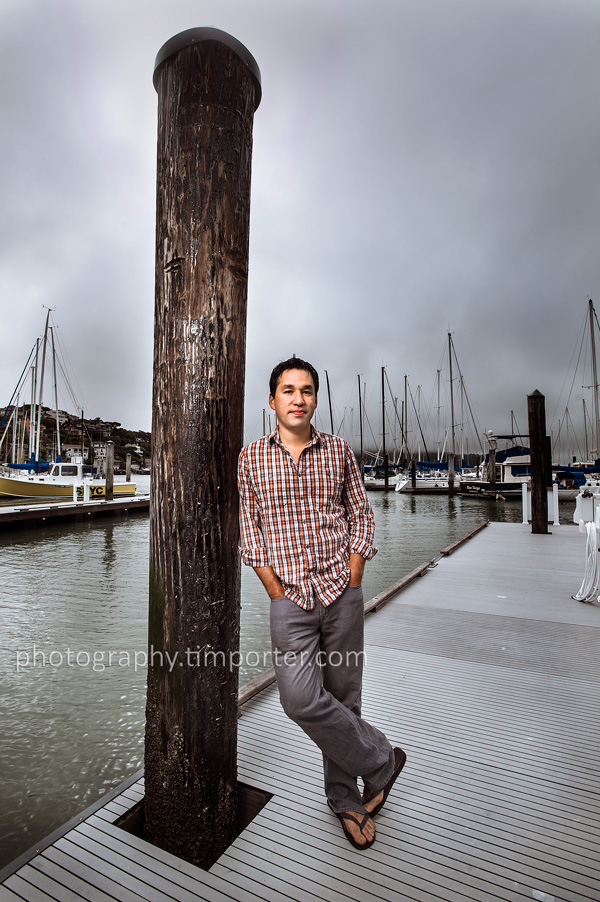
I also photographed Chong on a gray, damp August morning at the San Francisco Yacht Club in Belvedere, making the photo you see here. Woodlief, who was very pregnant at the time with her fourth child, wrangled a light-stand for me as we all stood on the wobbly dock.
In the 30 minutes we were together, Chong was relaxed and at ease. We didn’t talk about crash. I didn’t ask him what thoughts were in his head when he was in awash in the ocean. Woodlief did, though, and here is part of her account:
“Bryan experience the the helpless sensation of losing his breath while accidentally swallowing mouthfuls of water. He thought about giving up, he thought about his wife and baby son. … Time after time Bryan pulled himself up to safety just as waves pitched over him and hurled him backward, locking him underwater. ‘It was so steep and the waves kept hitting me,’ he says. ‘It was a constant struggle to get on the rocks.’
Read the whole story.
On the Job: The Music Man

Sweetwater, the resurrected music club in downtown Mill Valley, was its usual early evening scene — a Lululemon-clad smattering of late lunchers lingering in the outside patio, handsome families arriving for early dinners, clogging the entrance with strollers and dogs, and aging hipsters making their daily migration up the block from Peet’s as they transitioned their intake from caffeine to booze.
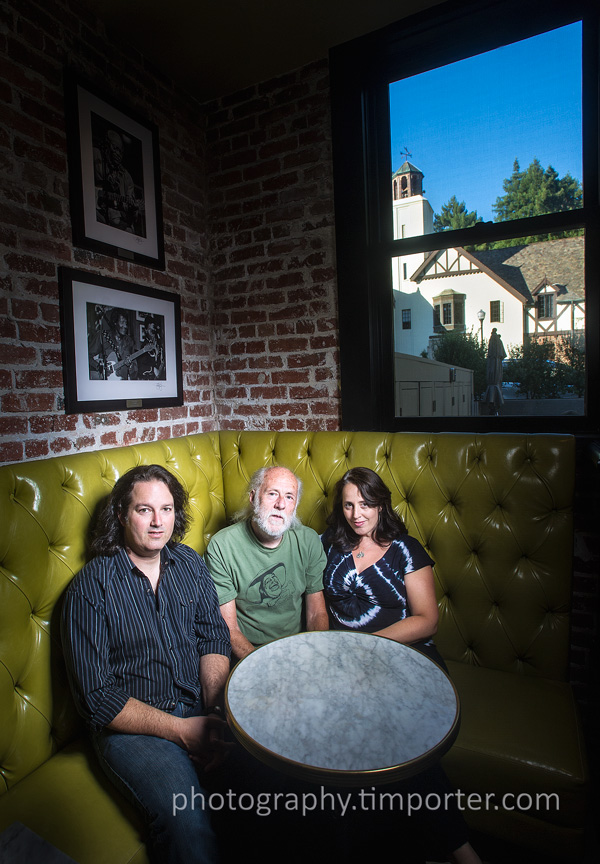
I was there to photograph John Goddard, who for 40 years was the proprietor of Village Music, the revered record store that closed a few years back, victim of Mill Valley’s morph from hippie haven to hedge fund heaven and, some say, last remaining vestige of a Marin County better known for its creative spirit than its stratospheric housing prices. John was coming with Monroe and Gillian Grisman, brother and sister, children of mandolinist (and Jerry Garcia collaborator) David Grisman, and makers of Village Music: Last of the Great Music Stores, a film that would debut at the Mill Valley Film Festival and about which Dan Jewett of Marin Magazine was writing a story.
I’d hoped to photograph the three of them on the patio with Sweetwater in the background. One look at the crowd told me that wasn’t going to happen. At minimum, an unfortunate incident with a weak-bladdered Golden Retriever a couple of years ago taught me never to leave lighting gear exposed in the presence of dogs.
Inside the front door, though,wrapping along one wall of Sweetwater’s small cafe, was a yellow banquette, its leatherette shiny and bright against the building’s red brick wall. There, in the corner, beneath a window was my spot.
Another lesson I’ve learned: Don’t ask permission. I told the hostess — politely — what I was doing and brought in a pack, a stand and a light, moved some tables out of the way, did a test shot and was ready in a couple of minutes.
Goddard and the Grismans showed shortly thereafter. Everyone knew them, so it took me a while to get them inside. I wanted to get this done because folks were filling the tables and I was losing my shooting space (and probably the patience of the waitresses).
Once they were seated, it went quickly. I made some safe shots first — as I always do to ensure I’ve got something — and then played with the window above them, changed lenses to the 17, climbed on a chair and made a few frames from above. My clambering either amused or frightened my subjects. I’m not sure which. But it resulted in this frame, my favorite from the day.
(Here’s the shot that ran in the magazine.)
On the Job: Red, White & Blue

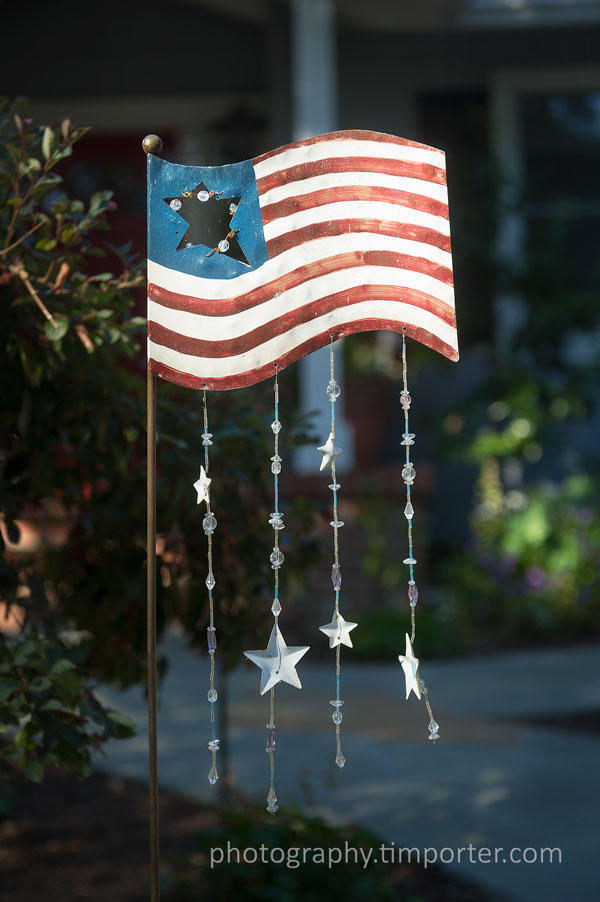
I just voted and am feeling more American than usual. To spread the democratic spirit — and to inspire your apathetic keister up off the couch if hasn’t voted yet — I offer this collection of stars and stripes, which I shot for Marin Magazine for its July issue.
You may be surprised, as I was, by how widely the flag is displayed here in one of the nation’s most notoriously liberal counties, although truthfully its does fly more frequently in the cul-de-sacs of surburban Novato and than in redwood canyons of hipster Mill Valley.
Flags are symbols, interpreted differently by each of us. For some the American flag signifies liberty, for others oppression. Four years ago, Barack Obama used its colors to communicate hope. This election, Mitt Romney wrapped his opposition in it.
In its earliest iterations the American flag represented individual freedom and collective self-determination. Freedom is now a politically charged word, hijacked by conservatives who wield it as a cudgel against those who question their values and sneered at by liberals who dismiss it as the refuge of small minds.
On this day, when we vote, something so many of the world’s people can’t do in a meaningful way, let’s embrace the flag as a symbol of opportunity — to make a choice, to live as we please, to speak our minds — something I hope we can all agree upon.
Tagged American flag, flag, Marin, Marin Magazine
Leave a comment
On the Job: The Lemonade Girl

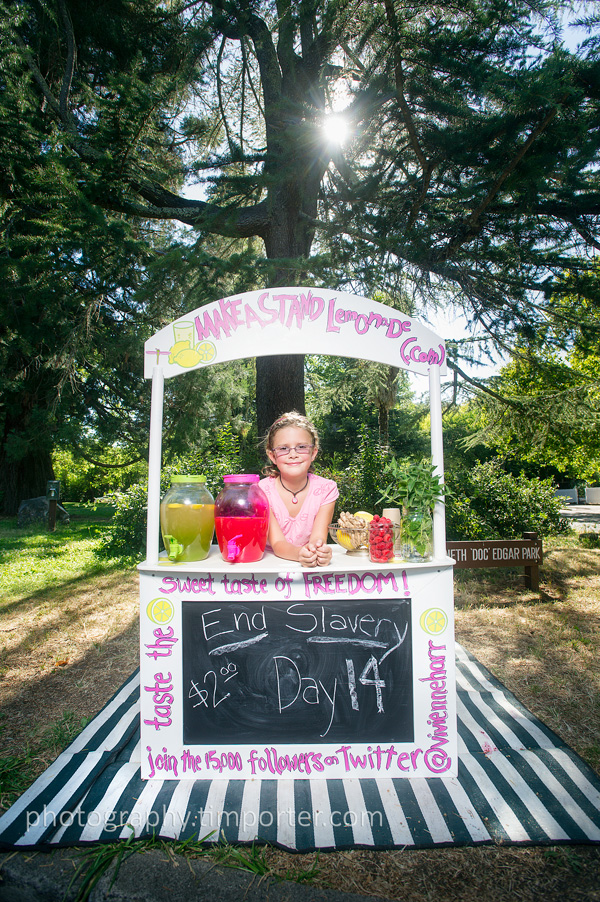
Now that we’re one day shy of the first day of Fall, I’m getting around to sharing some of the photos I made this Summer — and this is one of my favorites: Vivienne Harr, an 8-year-old Fairfax girl who set up a lemonade stand in a local park and with the help of her social media savvy dad, Eric Harr, has raised more than $30,000 (and counting) to combat child slavery.
Vivienne has drawn plenty of media attention. She’s as cute as they come, her organic mint-infused lemonade is tart and tasty, and her story is a compelling one: A photograph of two Nepalese children carrying heavy slabs of rock, taken by Marin photographer Lisa Kristine in her book Slavery, inspired young Vivienne to do something. She launched a web site (makeastandlemonade.com), opened her stand in Doc Edgar Park in Fairfax and set a goal of taking in $150,000 to be donated to Not For Sale, a anti-slavery organization. (How terrible is it that as this point of human history there is even a need for an “anti-slavery” group?)
Vivienne is still out there at the park in Fairfax if you want to donate (or you can skip the lemonade and use your credit card on her web site.) Or, connect with her on Twitter or Facebook.
One of the shots I made ran with this short feature in Marin Magazine.
On the Job: Teaching (and Learning)

Whenever I teach, as I’m doing this summer in a short class on action photography at The Image Flow in Mill Valley, I find two things to be the most challenging: Explaining to others what I do instinctively in a way they understand and not knowing what the students don’t know.
The first forces me to think in granular terms about what I do with the camera — and why. For example, one student asked me why I usually use ISO 400 as my base setting when most digital cameras have ISO settings lower than that. Well, I answered, somewhat lamely, it’s because I grew up on Tri-X, Kodak’s legendary black-and-white film. It had an ASA of 400 and my earliest lessons about light and manual exposure were learned using that number as a base — and those lessons still work today. In other words, it’s a habit, albeit one that serves me well.
The second challenge is more difficult. What each student knows about photography in general and the intricacies of their own camera in particular varies widely.
Most, not surprisingly, came to photography in the digital age and with cameras so advanced and so automatic that they skipped the need to studdy the basics of photography, so they have a poor understanding of the connections between light and exposure, between shutter speed and aperture, and between focal length and depth of field.
They all have inexpensive lenses that in a short twist of the barrel leap rom wide-angle to telephoto, so they’ve never had to master the physical art of moving through a scene with prime lenses in order to change the point of view or to get closer to or farther from a subject.
Because of these gaps, each time I attempt to explain something more advanced, such as capturing the fleetness of a runner with a pan or freezing the motion of boy on bike in a half-pipe, it opens the door to a more basic discussion about the principles behind the technique and where to find the buttons and dials on a particular brand of camera in order to get the technical stuff right.
For this reason, I learn along with my students. I learn about my own habits (good and bad), I learn how different types of cameras work (even their Nikons don’t function as mine does) and, most importantly, I learn I need patience in order to succeed — and that’s a lesson that applies to photography as well as teaching.
Also posted in Photography
Tagged Blackie's Pasture, half-pipe, Nikon, panning, photographing action, Photography, runner, The Image Flow, Tri-X
Leave a comment
On the Job: The Stand-in

Hey, Tim, I’m often asked, what’s the secret to killer lighting? (Really, it happens all the time).
They’re thinking I’m going to say expensive Swedish strobes (got ‘em) or compact, go-anywhere Nikon speedlights (got those, too) or even a hand-painted, Avedonish backdrop like Annie uses (don’t have that).

Wrong. Wrong. And wronger.
What I tell them is this: The secret to killer lighting is a stand-in — someone to be in front of the camera while you fiddle with the power or feather the softbox or pile sandbags on the stands because you’re doing an outdoor shoot in gale-force winds.
Sometimes the stand-in can be an assistant, someone you’re actually paying, such as photographer John Truong, left, posing with the Lark Theater behind him in preparation for a shot of the movie-house’s owner (here’s the final shot).
Other times the stand-in might be a writer you’re on assignment with, such as Nate Seltenrich of Oakland, above, who occupied the velvet couch for me inside Terrapin Crossroads in San Rafael while we waited for Grateful Dead bassist Phil Lesh and his wife, Jill. (Writers are generally less thrilled about standing in than assistants.)
Oftentimes, the stand-in might be a somewhat reluctant PR person (whom I won’t show for fear of losing future favor) or and even more reluctant spouse (ditto).
Who the stand-in is really doesn’t matter as long as they have the patience to hang in there until you get the lighting just right — that is, killer — so when the actual subject shows up (often someone with no patience whatsoever) you can make his or her picture straight off just like the professional you are.
On the Job: Bernice Baeza: 1943-2012

Bernice Baeza was sticky, meaning you only had to meet her for a few minutes, like I did, and she’d stick in your mind for long time.
At least that’s how she was for me. I photographed Bernice in April 2011 outside the Lark Theater in Larkspur for Marin Magazine. The magazine was writing about her successful resurrection of the moribund movie-house into a thriving community center that not only showed first-run and classic movies, but filled its seats with Oscar parties, simulcasts of opera and London theater and a long list of other events. When we met, she had just undertaken a similar project with a shuttered movie theater in Novato.
Bernice died on July 21, of lung cancer, the paper said. Nothing could have surprised me more. Was she sick when I made this photograph? She certainly didn’t seem so — although a disease as relentlessly deadly as lung cancer surely had to have been at work in the background then.
My first impression of her on the April evening was how un-Marin she was. The way she stood, solid and occupying her ground. The way she spoke, gently but directly. The way she dressed, dark even on this warm Spring night. All said New York, not Marin.
We chatted as I fussed with the lights and waited for the sky to darken so I could get the colorful neon of the Lark just right in the background, and I learned she was indeed a New Yorker. I told her a story about incident in my misspent youth when I rolled a car on the thruway near her birthplace of Nyack. She smiled knowingly and I thought we had a bond.
But maybe not. Maybe that’s just how she made everyone feel, welcome and worthy. Whatever it was, she stuck. I wish I had known her better. (Her family is maintaining her Facebook page.)
On the Job: San Rafael Pacifics
The San Rafael Pacifics, an independent minor league baseball team, played its first game last night. I was on hand at Albert Park in downtown San Rafael.
I needed a picture for Marin Magazine, but since it was for the August issue so I wanted something from the scene and not from the action — and there was plenty of both — a couple of home runs from the home team, a duck mascot (Sir Francis the Drake), seats on the field, kids and families galore and a kitschy character singing the national anthem, Bud E. Luv (above).
The idea to renovate the old ball park (which seats 800) and use it for a summer baseball league was controversial. Neighbors worried about traffic, noise and rowdy fans. My studio is a block from the stadium, so I understood their concerns.
Based on what I saw last night, though, those worries were baseless. Parking was easy, the crowd was chill and despite a few opening day glitches (announcer Will Durst bowing out at the last minute, for example) all was under control.
I recommend a visit. The baseball is fun, the stadium is beyond intimate and the dogs are as good as those at AT&T. Now I want to go back and shoot some baseball.
On the Job: A Painter

I had the opportunity this year to again photograph the winner of Marin Magazine’s annual cover contest. The winner, chosen from among more than 400 entries, was painter Greg Martin.
I photographed Greg in his studio, a basement space in his San Anselmo home. The studio is small, not more than than 10 x 20, and Greg is a big guy, what some would call a strapping lad. I squeezed a small strobe and umbrella against one wall, and let the light ricochet around the studio’s white walls and ceiling, producing a nice, soft look.
Greg’s artwork, which walks the line between whimsical and ethereal — a fun place to be — provided the backdrop. Later, I noticed he wore the same deep red Pelton’s Triumph T-shirt that he has in his bio photo for his website.
Greg was the main attraction at the magazine’s Open Studios’ party celebrating the finalists for the cover. Here are some snapshots of him and some of the others. He has a show up at Gallery Bergelli in Larkspur (the opening is tonight.)
I enjoy photographing artists, especially painters because their studios and their painting supplies fascinate me (although Greg’s was a bit too clean for my taste). Here’s my post from a year ago about photographing the 2011 cover contest winner and a collection of other artist portraits.
Visit your local Marin artist this weekend (May 12-13) during Marin Open Studios. I’m showing my newest work at The Image Flow, 401 Miller Ave., in Mill Valley, from 11-6.
On the Job: Copita Margarita
Two of the things I love to photograph are people (of course) and food. Occasionally, I get the chance to do both at once.
That happened recently when Marin Magazine asked me to photograph restaurateur Larry Mindel and former Chez Panisse cook and and writer Joanne Weir, who have teamed up as owners of the new Sausalito Mexican restaurant, Copita.
The idea for Copita, which bills itself as a tequileria, came out of Weir’s book, Tequila: A Guide to Types, Flights, Cocktails, and Bites, so I also wanted a picture of what Weir calls her “perfect” margarita.
I photographed Mindel, Weir and the “perfect” margarita on a weekday afternoon at Poggio, Mindel’s Italian restaurant on Bridgeway in Sausalito. For the picture of them, I used a quiet back corner of the restaurant, a big front window for light and and the helping hands of a publicist to hold a reflector. For the margarita photograph, I used a small Nikon Speedlight and left plenty of space for the art director to lay in some type. The lime wedge was Weir’s idea and it made the shot.
(For more of my food and restaurant photography, go here. And, don’t forget to buy my book: Organic Marin: Recipes from land to table.)
Tagged cocktail, Copita, drink, Joanne Weir, Larry Mindel, margarita, Poggio, Sausalito, tequila
Leave a comment
On the Job: Marin’s Tweeps

Put 10 or 12 people in a dark coffee shop, add in a freelance writer, a magazine editor, a roomful of customers and a couple of homeless people in the back, and you’ve got a scene.
I show up with a big light, a step ladder and a lot of attitude, hoping I can herd all these cats in front of the camera long enough to make something to illustrate a story about Marin’s twitterati. Yep, this is a tweet-up and these are the tweeps of Marin.
I’d rather photograph 10 kids than 10 adults. The kids will pay attention to me, out of fear or curiosity or the simple habit of listening to adults, but the grown-ups won’t stay focused for more than 10 seconds at time. They chit-chat, they get bored, they fuss. And when you throw in the cell-phone-in-your-hand factor, they check email, texts and tweets.
That all means that this kind of shot is lot of fun. As I shot away using almost ridiculous exposures — 1 or 2 seconds to burn in the ambient light while hitting them with the strobe — there was lots of joking, which I pretended wasn’t directed at me. Hey, they were laughing with me, right?
The group shot was done in five minutes, but the editor also wanted some casual, non-posed shots, so I gathered several of the tweeps together in a “non-pose,” moved the light in above them, put the 17mm on the camera and encouraged them to act it up as I shot. They did. And I did. The result is the vertical shot you see here, which ran full page in Marin Magazine as a section opener.
Thanks to Mimi Towle (@mimitowle) for organizing it and the tweeps: Sally Kuhlman (@Sally_K), Sarah Houghton (@TheLib), Suzanna Stinnett (@Brainmaker), Maria Benet (@Alembic), Toni Carreiro (@toniCarr) and Marilyn LoRusso (@fun_master).
And I’m @timporterphoto.
On the Job: The Threat of Rising Seas
- High tide already floods the bike path through Bothin Marsh in Mill Valley.
I wrote and photographed a piece for the current issue of Marin Magazine about the projected effects of climate change, most specifically sea-level rise, on Marin County.
Marin, like much of the San Francisco Bay Area and other parts of California, faces a wetter future. If current temperature and sea level trends continue through the century, routine tides could be as much as 55 inches higher than they are today and even higher during storm surges.
Imagine the affect of four-and-a-half feet more water on coastal communities such as Mill Valley, where today’s highest tides already flood city streets, marshes and recreation areas. The bike rider above is crossing Bothin Marsh between Mill Valley and Sausalito, which is already inundated several times a month by winter tides.
If what scientists predict comes to pass — and some form of it will despite all of today’s “green” mitigation efforts — rising seas are going to change the way we live and extract severe financial and social costs.
Here is the opening section. The rest is below the jump (or here online).
Rising Seas: Marin prepares for a wetter, warmer future
On the winter days when the monthly tides are highest, you can stand on the narrow, asphalt ribbon of the bike path that traverses Bothin Marsh in Mill Valley and watch the water of Richardson Bay climb over the man-made banks and rise slowly, inexorably, until its cold wetness reaches your shins. You are no longer on dry land. You are in the middle of the bay.
Flash forward to the year 2100. The earth has had 88 more years to warm up, and the seas have been rising a little more every year. Your grandkids stand in that same place on the marsh and wait for high tide. When it comes, the water flows over their heads.
That’s climate change. That’s the threat Marin County faces — higher seas, bigger tides and stronger waves that could drown the marshlands of Mill Valley and Novato, flood neighborhoods built on reclaimed land in Tam Valley, Santa Venetia and Hamilton, and erode the coastal bluffs of Bolinas.
The mess that rising seas could make of Marin is but a small part of the larger challenge climate change presents to the planet. But this story is not about the global effort to regulate carbon emissions, not about the national yammering of politicians, preachers and scientific professionals about why the earth is warming (is it man, is it nature, is it a vengeful God delivering payback for our profligate ways?), and not about whether the earth is in fact getting warmer. The mercury is rising and the oceans along with it.
This story is about Marin County and how a lot of people here are trying to make sure that come the day when the waters of San Francisco Bay — which have already risen 8 inches in the last century — are lapping at the doorsteps of homes and businesses now hundreds of feet from shore, that the inhabitants of that warmer, wetter future do not ask of our generation: Why didn’t they do something?