
To read my notes about Foster would likely take longer than to read the book itself, a bite-sized novella laden with more human insight than many heavily-blurbed behemoths.
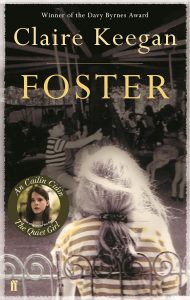
Narrated by a teenage girl, never named, but a stand-in for every adolescent enduring the hardships of an unhappy home, the story spans a summer in rural Ireland when the girl is sent to live with distant relatives while her mother prepares to have another baby.
The couple that takes in the girl, John and Edna Kinsella, are farmers, like her own parents, but prosperous, childless, loving and industrious. The girl experiences much that is new to her – a full table, a bathtub to herself, and a father who does not yell at and threaten her but walks with her hand in hand.
A tragedy explains Kinsella’s childless state and their desire to care for the girl. “God help you, child,” Edna whispers to her. “If you were mine, I’d never leave you in a house with strangers.” Betraying their crude baseness, the girl’s parents blame the Kinsellas for the tragedy (while, ironically, asking them to care for their daughter).
The summer is transformative. The girl develops an adult eye, able to divine the differences between the two families. She also rediscovers her childhood, which had been buried under domestic labor and her father’s harshness. Her astute observations keep a story that could have turned maudlin far removed from common emotional tropes.
The ending is both decisive and ambiguous, as all are of life’s messy moments.
A wonderful book. A perfect story.