
I have, quite without intention, read two excellent books in succession, both narrated by anonymous women, both about discovery and acceptance of self.
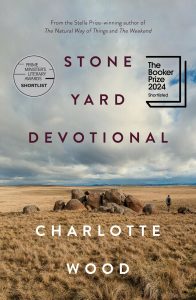
In the first, “Foster,” by Claire Keegan, a teenage girl gains perspective on the hardships in her rural Irish life; in the second, this one, “Stone Yard Devotional,” a middle-aged woman leaves husband and domestic comfort behind to seek solace in a remote Australian abbey amid a cluster of cloistered nuns, where, within the repetition of ritual – spiritual and laborious – contentment befalls her.
Her journey to serenity is neither quick nor direct. It meanders through doubt about what she is doing, guilt about what she has done, and embarrassingly stubborn adolescent angst, which erupts like an ill-timed acne bloom when a former high-school classmate, Helen Parry, turned global eco-activist nun shows up at the abbey.
Parry brings with her the bones of another nun, one who had lived in the abbey but left to work with abused women in Thailand, where she was killed by a lustful priest. Parry arrives as the abbey is besieged by a plague of mice (apparently something commonplace in South Australia). Initially, the nuns, in keeping with their distaste for violence, deal with the infestation benignly, but as the rodents proliferate (they can birth up to 10 babies every 20 days) and they are found literally underfoot, under sheets, and under every roof, the holy women resort to all-out war.
The plague might be an allegory – the evils good must embrace in order to find grace, or it might just be a well-told, often humorous anecdote about how the dictum to love all of God’s creatures fails when thousands of them are eating everything you own.
Ultimately, murdered mice aside, Stone Yard Devotional is a familiar story, that of yearning for more than what ordinary modern life provides, which, for the narrator and many others, is a compilation of lessened expectation, practical compromise, and creeping realization that the only clock that always tells the correct time is the biological one.
This is hardly a religious book. The narrator does not believe the phrases of the abbey’s many daily prayers. She does, however, find comfort in the ritual of saying them in common company, which is, in essence, what all religions promise: Do this, and you will live well, now and later. Certainty through routine.
As a lapsed believer in all celestial beings, the appealing message I (and the narrator) find in Stone Yard Devotion is decidedly more earthbound than heavenly: Get up, do good work, be kind, eschew fear, sleep, do it again. It is a self-directed religion of simplicity, and provides as much surety as can be found in this chaotic life of ours.