Bookshelf – Listen up!

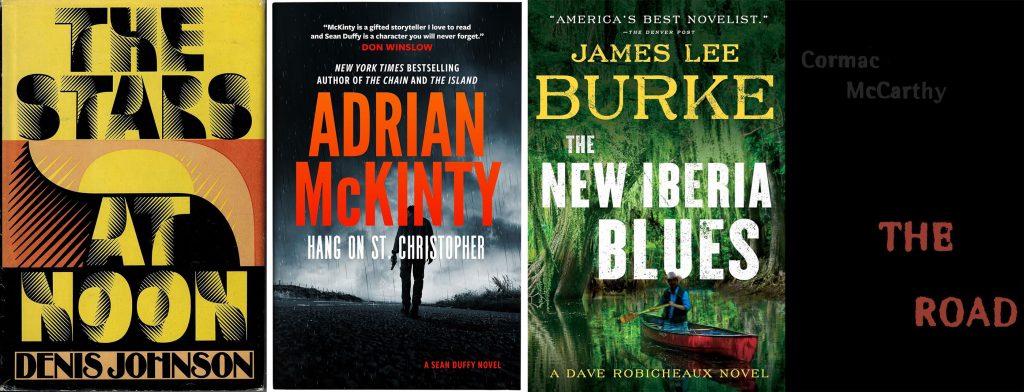
Approaching the midpoint of a year in books best described as “meh” – a result of my own poor selection and persistent intrusion into my quiet hours by the noise of the real world – I can say as a positive note that more than a few of the most satisfying titles thus far are audiobooks.

The four novels below have one thing: a stellar reader whose rhythm, accent, and overall transformation of the written word into literary performance is as soothing as it is captivating.

They are:

* Hang on St. Christopher, Adrian McKinty, the eighth of the Sean Duffy detective novels. Narrated, as were the previous seven, by Gerard Doyle, a true master of Irish nuance.

* The Road, Cormac McCarthy, the father-son tale of dystopic bleakness. Narrated by the late Tom Stechschulte, who delivers each of McCarthy’s precisely chosen words as a savory morsel. A delicious experience.

* The New Iberia Blues, James Lee Burke, part of the series about Louisiana detective Dave Robicheaux. As always with Burke, the story packs punch, but the narration by actor Will Patton (one of my favorite readers) elevates the prose to theater.

* The Stars at Noon, Denis Johnson, the story of a young woman adrift in Nicaragua during the Sandinista rebellion. Narrated again by Patton, his hypnotic almost comforting manner provides antidote to the angst, danger, and dissoluteness that defines the story.        `,
Bookshelf – The Cold Cold Ground, Adrian McKinty

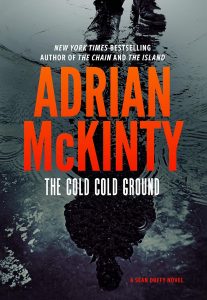
As police procedurals go – and many of them really don’t go anywhere – this first book of Adrian McKinty’s series about detective Sean Duffy has several advantages:

* First, it is set amidst the turbulence of the Troubles, the sectarian violence that plagued Northern Ireland for three decades. Social unrest provides rich fodder for political intrigue and random mayhem, and there’s plenty of both here.

* Second, the text abounds with the linguistic curiosities of the location – bog (toilet), banjaxed (messed up), sleekit (sly), peeler (cop), bonce (head), hallion (worthless fellow), and, my favorite, eejit (idiot). To amuse your American self, say them aloud in a faux accent.

* Third, the action in The Cold Cold Ground gets hot, hot, hotter as the plot progresses – which is a good thing because early on the book wallows in a wee pochle (mess) as Mckinty introduces characters and sets up the story almost exclusively through pages of dialog. In fact, the difference in pacing between the beginning and the ending is so pronounced that it seems like McKinty took note of the slog and deliberately ditched the Prius for a Porsche.

The story itself involves the suspicious death of a young woman and the gruesome murders of two gay men (at a time when homosexuality was illegal in Northern Island). Duffy and his small squad welcome an actual crime as relief from either trying to prevent Catholics and Protestants from killing one another or cleaning up the results when they do. They learn, though, that there’s no escaping the Troubles.

McKinty hangs enough flesh on Duffy’s bones to create a solid character, an officer of the law for whom justice has multiple definitions. He’s the kind of cop we probably don’t want in our own community, but the type that makes for good reading.